Two books, one drawing
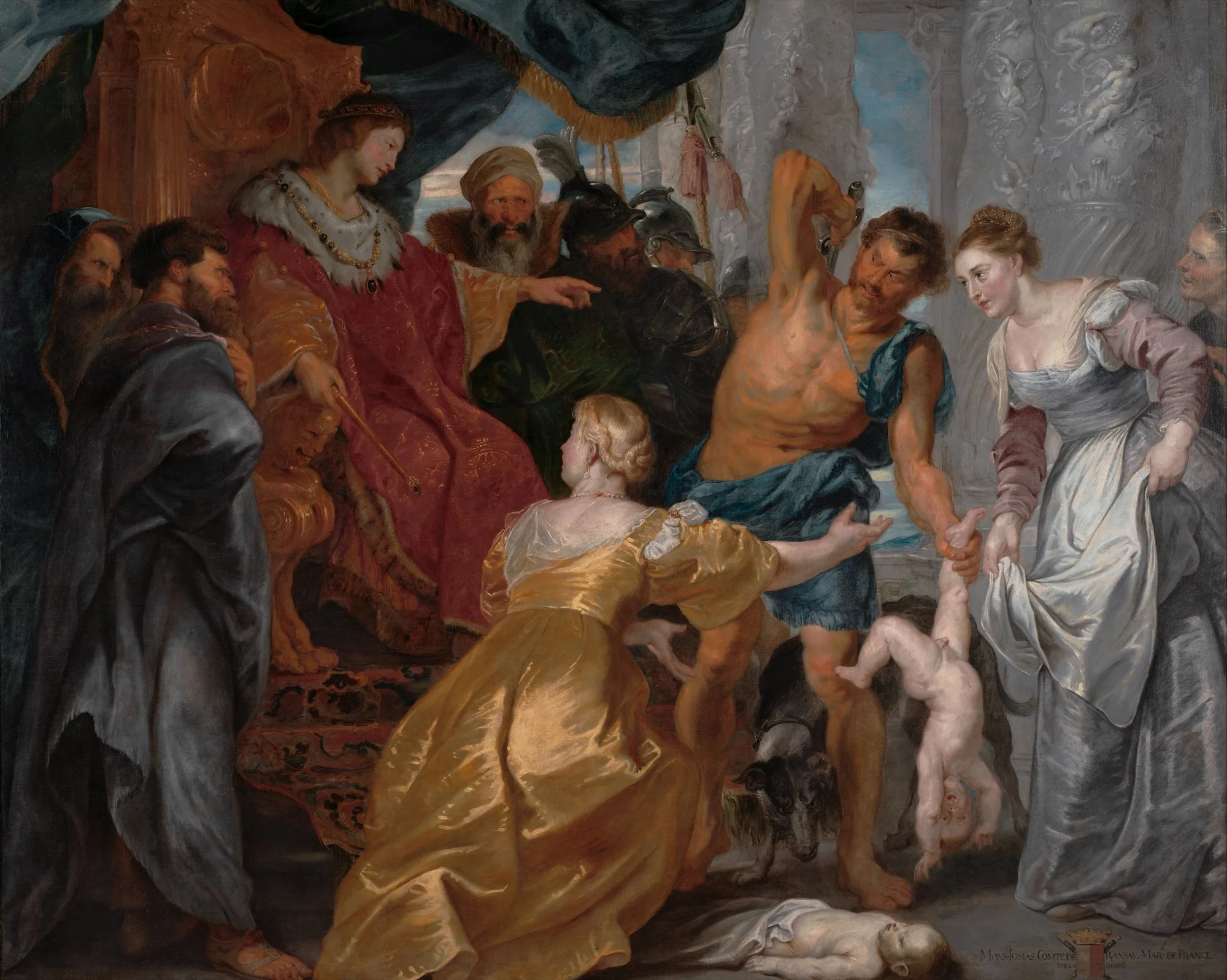
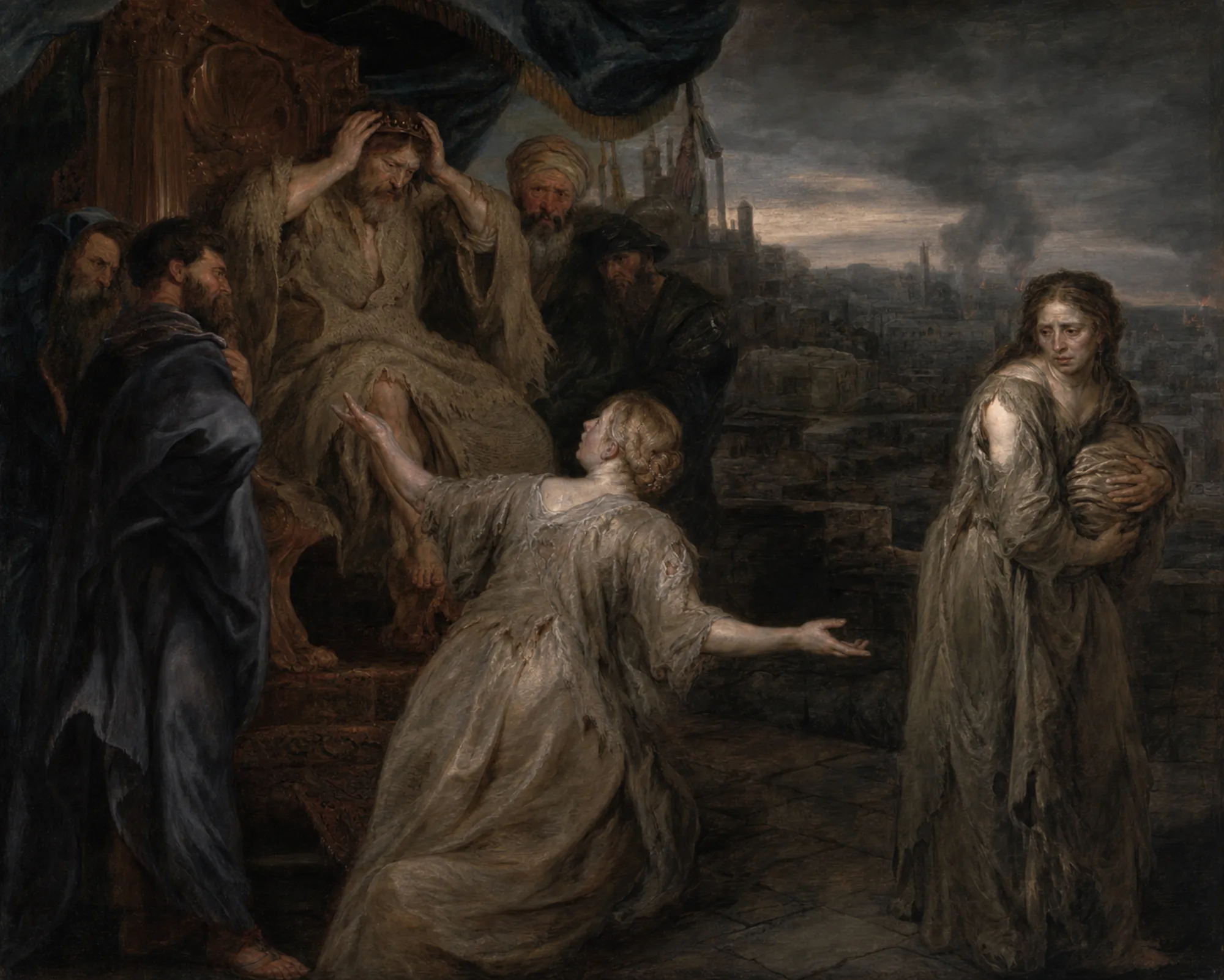
In 1 Kings, two women come before Solomon with one living child and one dead. The king stages a performance — bring me a sword, cut the child in half — and the real mother reveals herself by surrendering her claim. This is the story we tell about wisdom: the sovereign can read bodies, can stage a theater that forces truth to the surface. In 2 Kings, two women come before the king of Samaria during a siege. They have made a pact: we will eat my child today and yours tomorrow. They ate the first child. The second mother hid hers. The king tears his clothes and underneath he is already wearing sackcloth — he has been mourning in private, powerless, performing sovereignty over a situation that sovereignty cannot address. Same structural elements. Two women, children, an appeal to the king, a pact. But the stories invert: Solomon's theater produces justice; the siege produces a horror that no theater can contain. I learned to place these texts side by side in day school, long before I had the word for what I was doing. The friction between them — the structural rhyme that produces opposite meanings — is not a puzzle to solve. It is a practice to inhabit. That practice is what led me to Columbia, to the peplos and Actaeon, to the understanding that frames produce meaning and that catching the frame in the act of framing is the deepest thing design can do.
1 Kings 3:16–28 · 2 Kings 6:24–30
The first painting is Rubens’s Judgment of Solomon; the second is its generated Samaria counterpart.
Samaria’s second woman speaks an original response written for this adaptation: “I ate with thee. But I will not give thee my son.” These words are not in the biblical account. The voices are AI-generated.
The earlier performed interpretation