The browser theatreThe Finding of Erichthonius
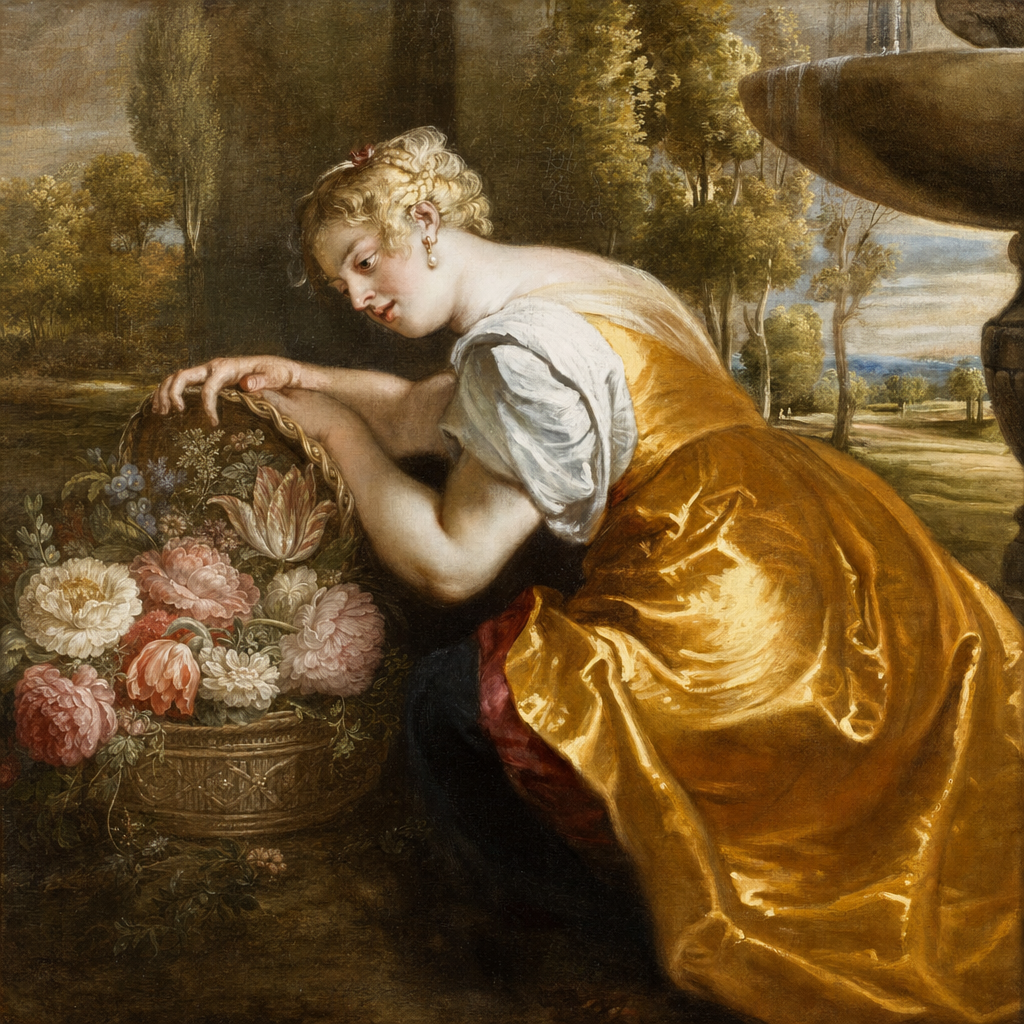
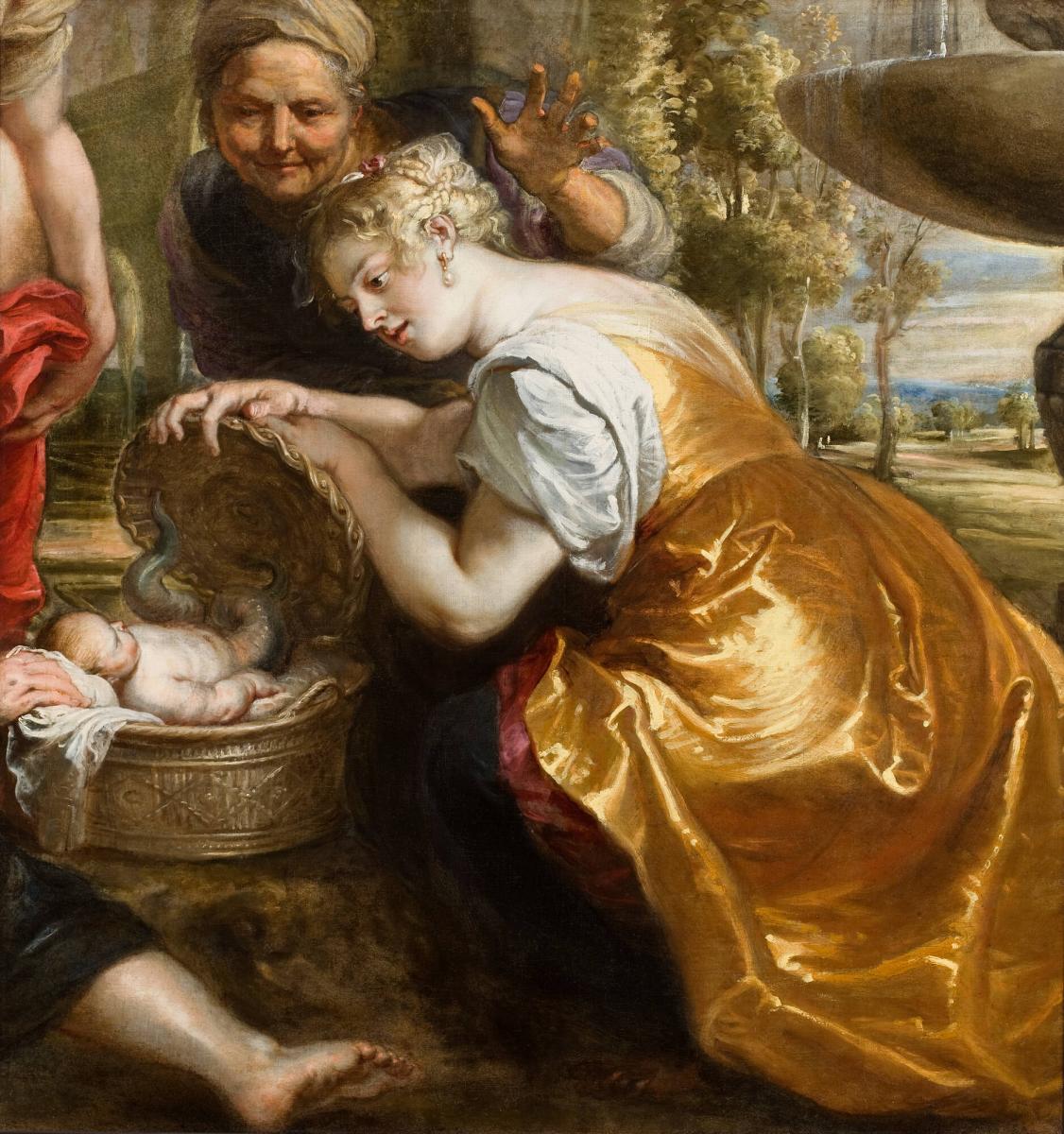
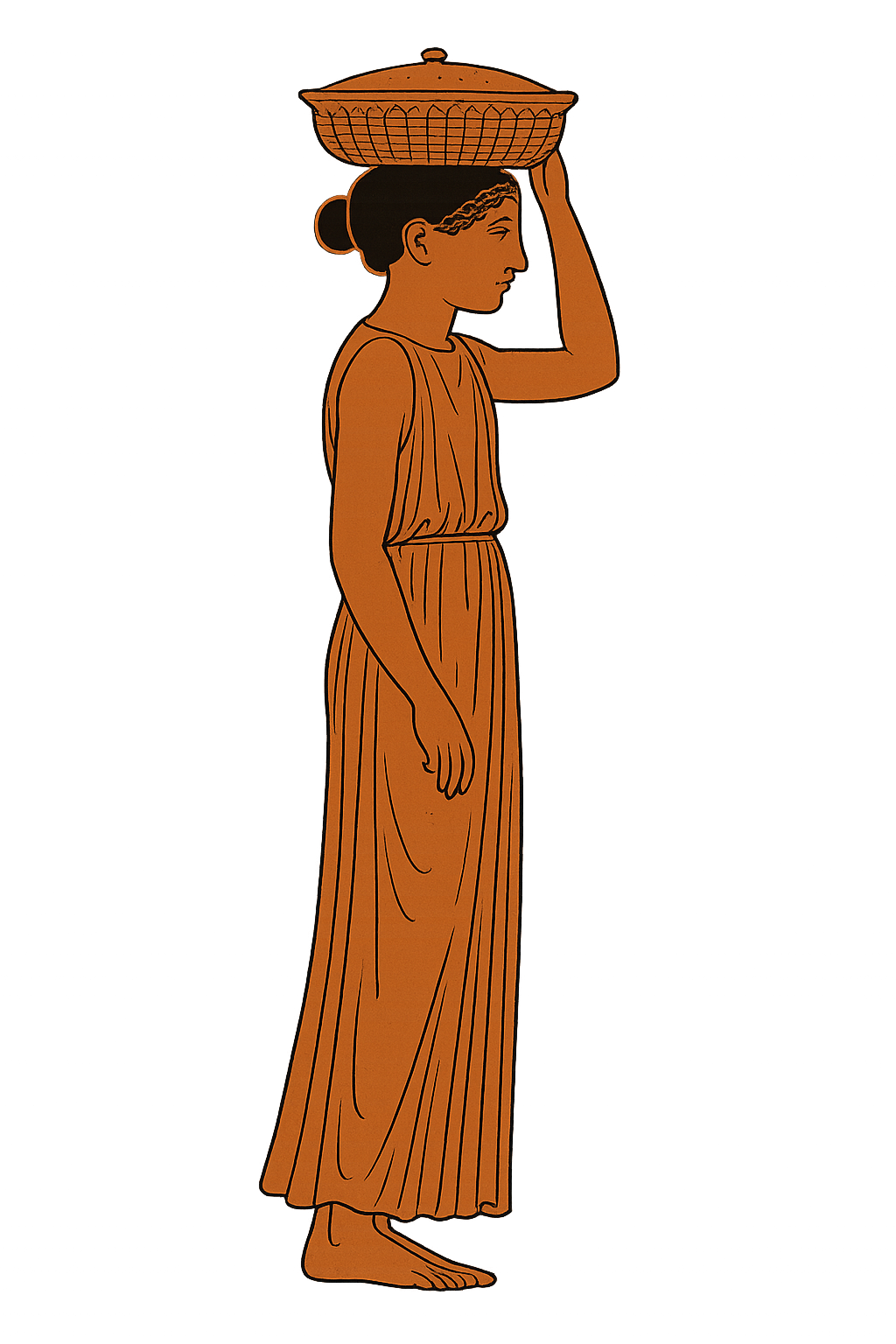
Generated reconstruction: a girl holding a basket of blossomsSurviving Rubens fragment: an infant with serpent legs, a nurse, and other figures' limbs appear around the girl
Flower state: generated reconstructionOil on canvas / 1632–33

The source drawer

The history is documented. Some of the images that let you enter it are conjectures.

The surviving object
Peter Paul Rubens, The Finding of Erichthonius, 1632–33. Oil on canvas, 109.3 × 103.4 cm. Allen Memorial Art Museum, Oberlin, 1944.96. The displayed reproduction is the project’s existing museum source file. Read the museum record.
The flowers
The museum records that the work was cut down and overpainted by 1786. Burchard recognized it in 1939. The flower plate here was generated for this project on September 2, 2026; it is not a surviving photograph of the overpaint. The movable opening compares two images, not a reconstruction of the cleaning procedure. Their details do not register perfectly.
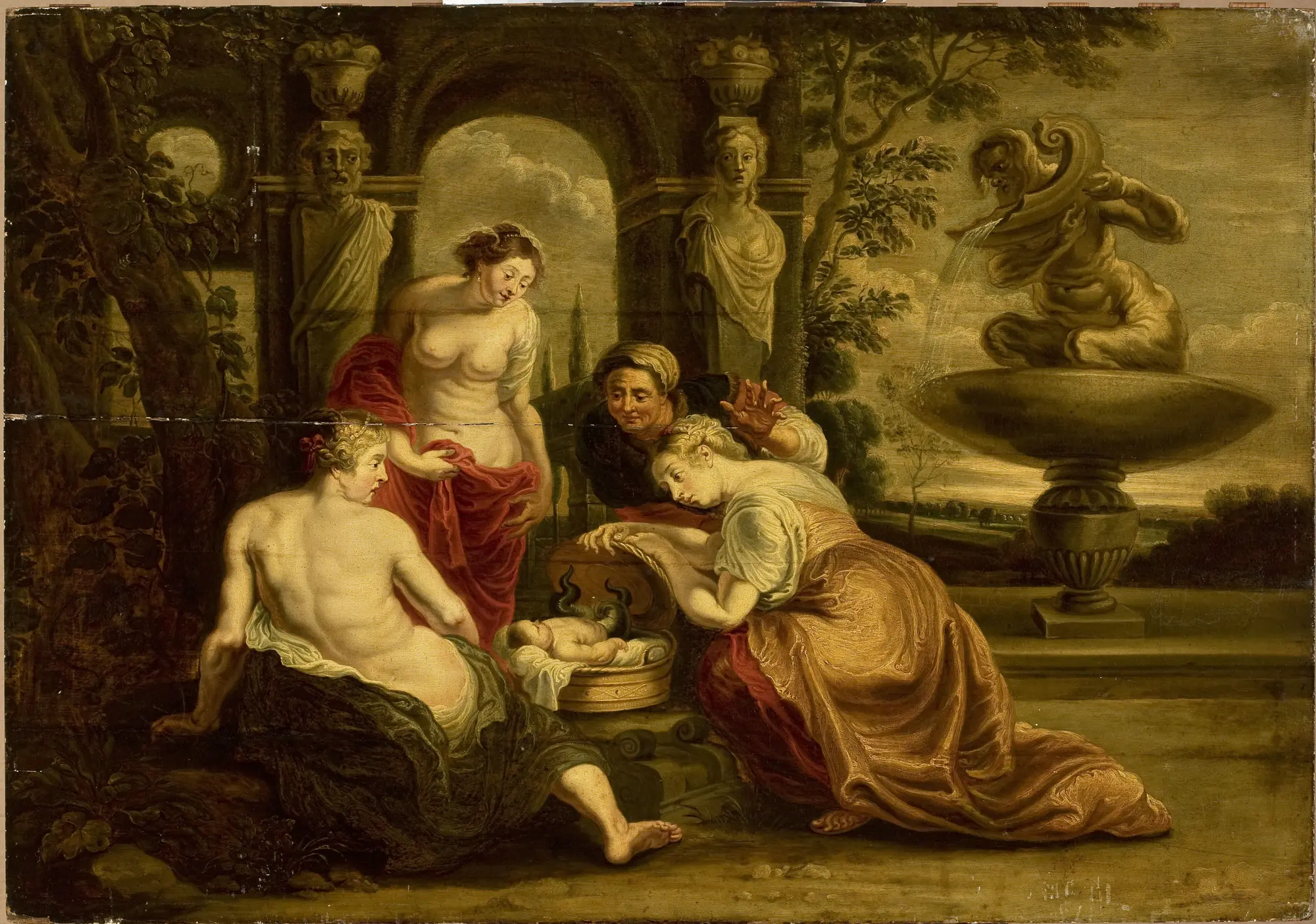
The missing composition
A copy after Rubens, National Museum in Warsaw, M.Ob.1047. We display the project’s existing derivative of that source reproduction. It records the full composition; it is not the lost Rubens canvas or the print used by Burchard. The rectangle is an approximate visual alignment. Copy’s image record.
The myth is not a single telling
Athena entrusted the closed basket to Cecrops’s daughters. Rubens painted its opening. The museum associates this composition with Ovid’s telling, in which the sisters’ disobedience goes unpunished. The rite, the myth, and conservation are different acts; this encounter brings them into relation without making them morally equivalent. The museum’s extended account.
The passage
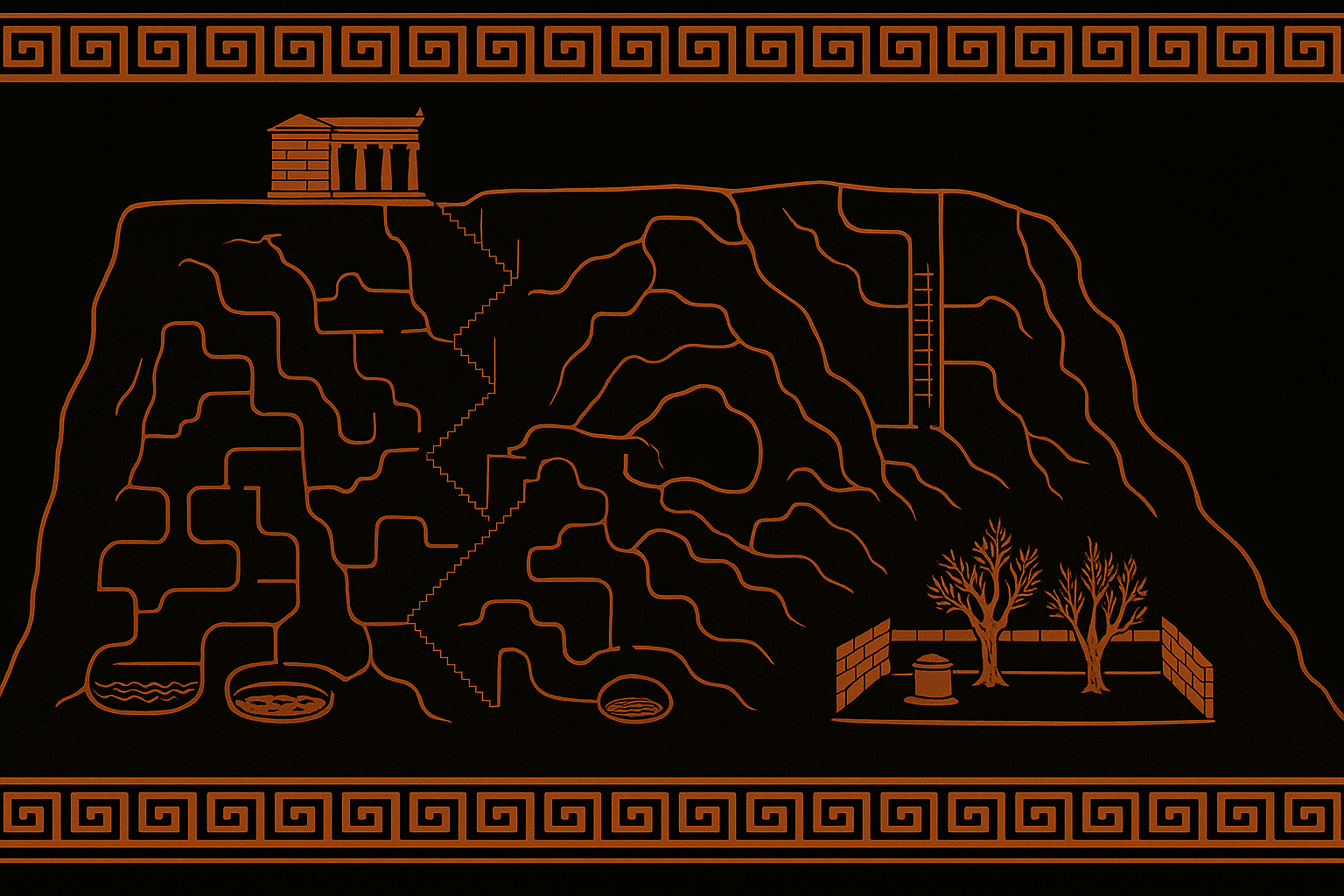
The Acropolis plate is an existing generated illustration from the project. Its route is an interpretive stage, not a surveyed ancient tunnel. The quoted passage comes from The Chronotope of the Virtual. The thought that places can be palimpsests appears in the September 2 Palimpsest room draft. The ending’s arrangement is a new interface composition of those existing materials.
A layer still outside this room
I chose my Outerboros sleeve as this painting’s latest “when.” The actual cover is not included in this study.